
What If We Got Curious About Confidence?
I've recently given a lot of thought to the assumptions we make about other people's confidence.
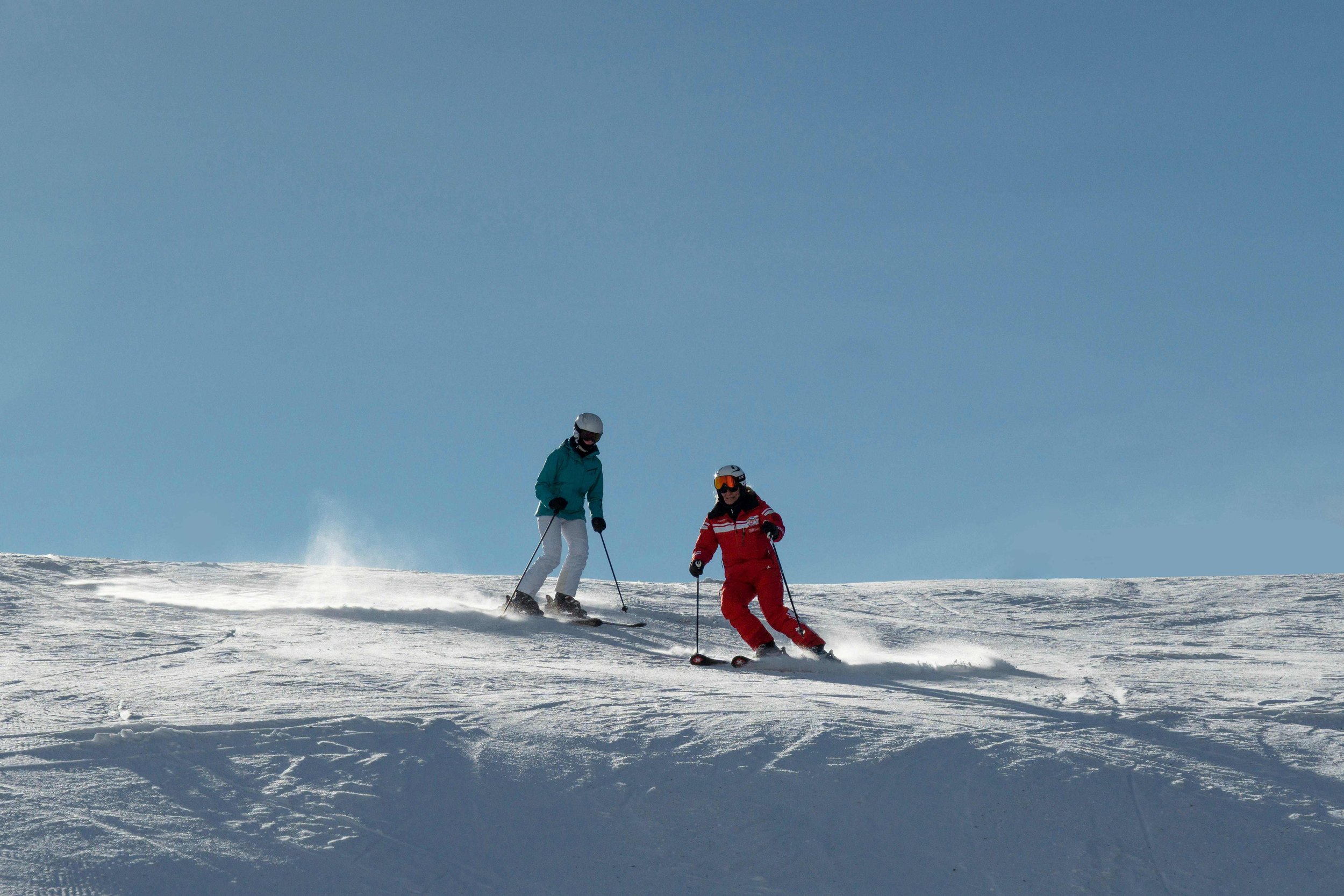
Skiing is particularly interesting because so much of it is visible. We can see which piste somebody chooses, how quickly they ski, whether they hesitate at the top of a slope or whether they decide not to ski something at all.
What we can't see is why.
I've been reminded of that through some of the conversations happening around my posts on social media. People have shared very different experiences of fear and confidence, but I've also noticed how quickly we can compare somebody else's experience with our own.
"That doesn't frighten me."
"I've skied much harder runs than that."
"You just need to..."
I don't think there's necessarily anything unkind behind those responses. Often, someone is simply sharing their own experience or trying to help. But they reminded me of a quote from Walt Whitman, replayed by Ted Lasso:
"Be curious, not judgemental."
I wonder what might change if we became a little more curious about what's actually going on for the person in front of us.
Instead of thinking, "Why are they nervous about this?", perhaps we could ask, "I wonder what it is about this that feels frightening to them?"
Because the answer could be almost anything.
They may have had a serious accident. They may be returning to skiing after years away. They might be perfectly capable technically but have stopped trusting themselves. They may have learnt to ski as an adult and still feel that everyone else knows something they don't. They could be worrying about getting injured because the consequences of an injury at 50 feel very different from the consequences at 20.
Or perhaps nothing dramatic has happened at all.
Maybe they're simply frightened.
And surely that's enough.
One of the things I've become increasingly aware of through my coaching is just how individual ski confidence is. Two people can be standing on exactly the same piste, in exactly the same conditions, with broadly similar skiing ability, and be having completely different experiences.
That's why I'm increasingly uncomfortable with the word nervous when it's used as a category.
Of course, it's useful shorthand. If someone contacts a ski school and says they're a nervous skier, that gives the person taking the booking somewhere to start. But it doesn't really tell us very much about what that skier needs.
What are they nervous about?
Speed? Ice? Steepness? Falling? Other skiers? Chairlifts? Being left behind? Looking stupid? Getting injured? Disappointing their family?
Perhaps they've lost confidence after something happened. Perhaps they've never really felt confident in the first place.
And even those answers only tell us part of the story.
I think this matters because when somebody already feels uncertain about themselves, being shown how easy somebody else finds something doesn't necessarily reassure them. Sometimes it does the opposite.
It can become another piece of evidence for the thought they're already carrying:
"Everyone else can do this. Why can't I?"
That's where I think curiosity becomes incredibly powerful.
And this isn't a criticism of ski instructors. Quite the opposite. Some of the best instructors I've encountered are exceptionally good at this. They notice. They ask questions. They adapt. They recognise that the skier standing in front of them is a person first and a set of technical skills second.
Nor is it only the responsibility of instructors. It's relevant to the person taking the booking at the ski school, the friend organising the group lesson, the partner choosing the route and those of us skiing alongside somebody whose experience is different from our own.
We don't need to have experienced somebody else's fear to take it seriously.
We just need to be interested enough to understand it.
Perhaps that's the part I've been thinking about most.
When someone says they're frightened, our instinct can be to reassure them. You'll be fine. It's not that steep. You've skied worse than this. Don't worry.
All well intended.
But perhaps, before reassuring them, there's another question we could ask.
"What is it about this that's worrying you?"
Because once we understand that, we have a much better chance of giving someone the support they actually need rather than the support we assume they need.
And sometimes simply being asked the question might be more helpful than we realise.
