
The Control You Think You’ve Lost (and the Control You Actually Have)
Yesterday, this thought kept coming back to me while I was skiing.
Not about technique.
Not about conditions.
Not even about confidence.
It was about control.
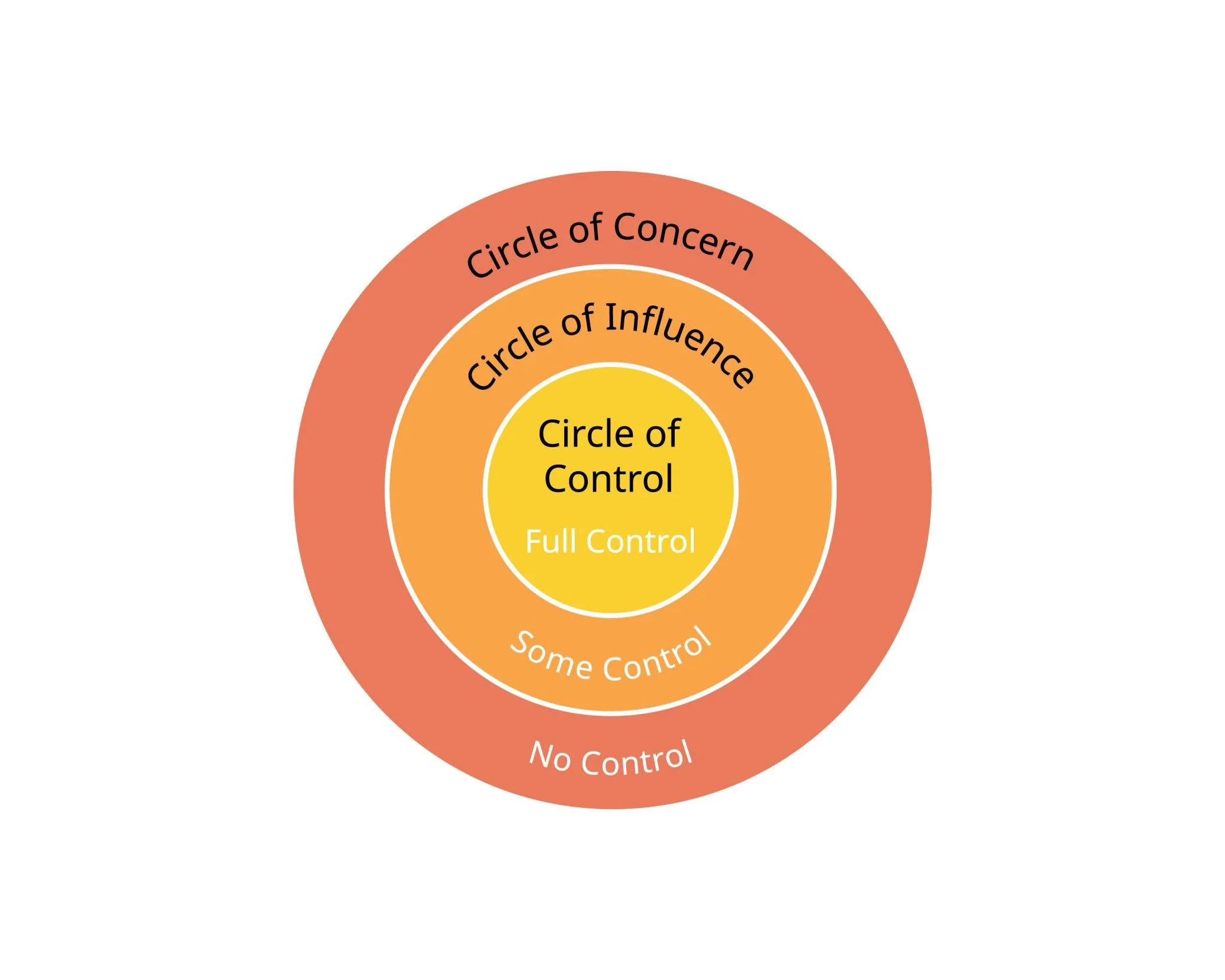
I’d been talking recently with a fellow coach about something called the control circle - a simple visual reminder of where our energy is best placed when things feel tense or overwhelming.
At first glance, it looks almost too simple. But like most simple things, it’s the remembering - in the moment - that matters.
A simple framework we forget under pressure
The image shows three layers:
The Circle of Control - what’s actually within your control
The Circle of Influence - what you may be able to affect, but not fully control
The Circle of Concern - everything else
When we’re calm, this makes sense.
When we’re triggered, tired, or already halfway down a slope? We often forget - and try to control things that were never ours to hold. I know this only too well!
How this showed up for me on the mountain
While skiing yesterday, I became very aware of how much information we’re constantly taking in.
The sound of skis approaching from behind.
The unpredictability of other people.
The awareness that things can change quickly.
I can’t control:
Other people on the slopes
Their speed or awareness
Whether I hear them coming up behind me
All of that sits firmly outside my circle of control - even if my nervous system would love to argue otherwise.
What is within my control is what happens next.
The thought that makes the difference
The moment of tension usually comes with a familiar story:
They’re going to hit me.
I’m going to be knocked over.
This isn’t safe.
Those thoughts don’t live in the outer circle - they land right in the centre.
Because while I can’t control what others do, I can control:
The story I tell myself
The meaning I attach to a sound or sensation
How much I tighten or soften in response
The language I use (not always printable - progress, not perfection!)
When I meet that moment with something more grounded -
I’m skiing predictably.
I’m aware of my space.
I can move if I reminding myself -
my body responds very differently.
Same slope.
Same people.
Different experience.
When the stakes feel higher
This awareness becomes even sharper when I’m skiing with Alida.
That instinct to protect is strong.
The scanning increases.
The responsibility feels heavier.
Again, the diagram is a useful reminder.
I can’t control:
Other skiers
The noise of the mountain
Every possible outcome
But I can control:
How tightly I hold my body
Whether I catastrophise every sound
The emotional tone I bring into the moment
And children feel that tone far more than they hear our words.
Why this matters beyond skiing
This isn’t just about the mountain.
I see the same pattern off the slopes all the time:
Trying to control how others think or respond
Replaying conversations you can’t undo
Carrying responsibility for outcomes you don’t own
The control circle doesn’t ask you to stop caring.It asks you to place your energy where it can actually help.
A question to practise this week
When you notice tension rising - whether skiing, parenting, working, or just being human - try asking:
Which circle am I in right now?
If it’s outside your control:
Let the shoulders drop
Let the breath soften
Bring your attention back inward
If it is within your control:
Choose deliberately
Act with clarity
Trust yourself to respond
That’s where confidence really lives - not in controlling everything, but in knowing where your control begins and ends.
A quiet reminder
You don’t need more control. You need clearer boundaries around it.
And sometimes, that clarity is enough to change how safe and capable you feel - even when nothing else changes.
