
When Age Starts Whispering on the Chairlift
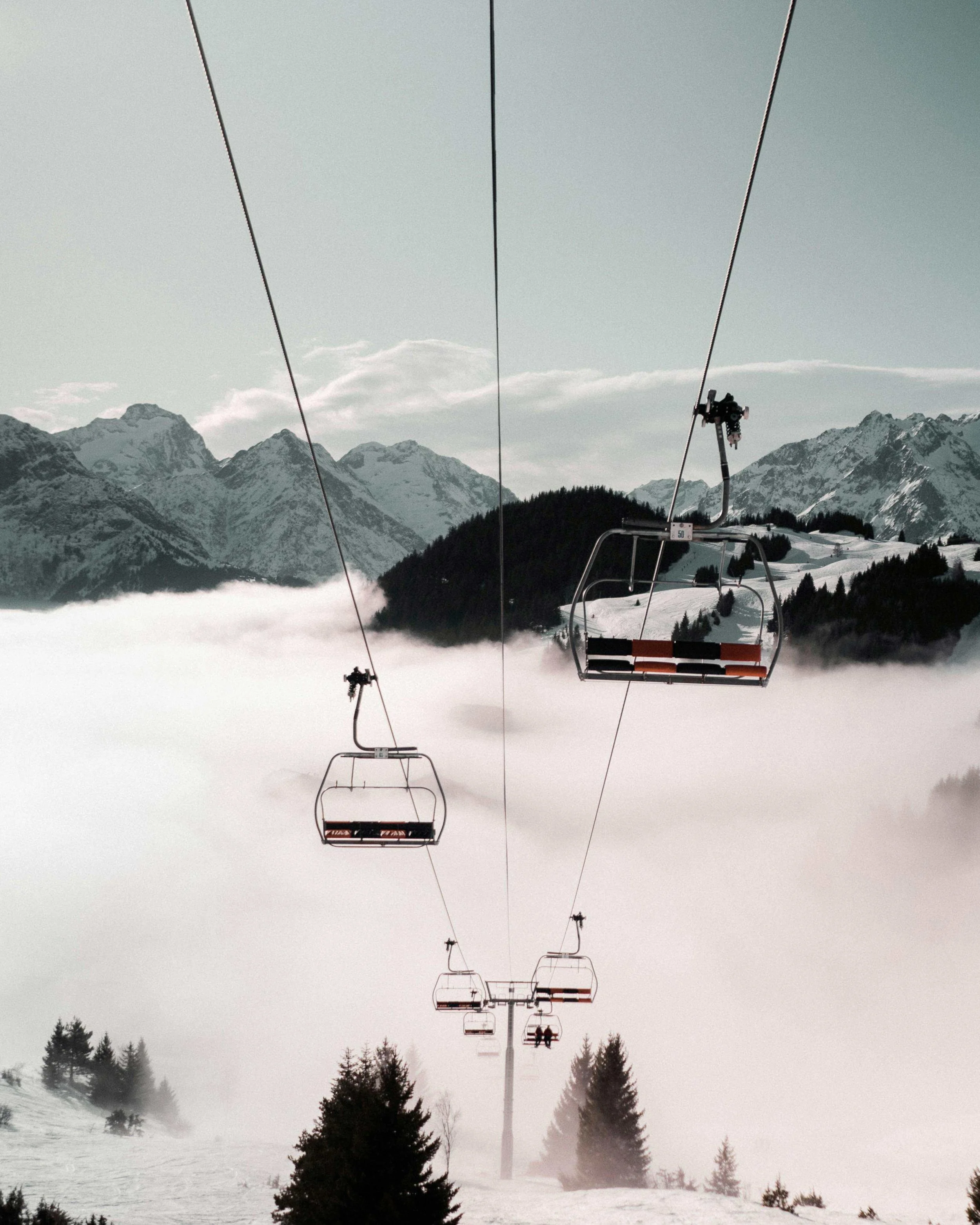
There’s a moment many of my clients describe.
It doesn’t happen dramatically. There’s no sudden announcement.
Instead, it arrives quietly on the chairlift.
A thought appears that never used to be there.
What if I fall?
What if I hurt myself?
What if it takes months to recover?
For many women in their 40s, 50s and beyond, skiing doesn’t suddenly become harder physically. But mentally, something shifts.
And it’s not weakness. It’s awareness.
Because by this stage in life, we know more.
We know injuries happen.
We know recovery takes longer.
We’ve seen friends break wrists, knees, shoulders.
We understand the consequences.
Suddenly the mind starts running calculations it never bothered with before.
And that’s when confidence can begin to wobble.
The body changes. The mind reacts.
As we age, the body does take longer to recover. That’s simply biology.
A fall at 25 might mean a bruise and a laugh.
A fall at 45 might mean six weeks off skiing.
At 60, it might mean months of rehab.
Our brains know this.
So it does what it’s designed to do: it tries to protect you.
The problem is, protection can quickly turn into over-protection.
What begins as healthy awareness can quietly become hesitation, tension, and second-guessing.
And that’s when skiing, or any activity you love, starts to feel heavier than it used to.
The trap many people fall into
Here’s the mistake I see all the time.
People assume the answer is to push through the fear.
Be tougher.
Be braver.
Be more determined.
But confidence rarely responds well to force.
The real shift happens when you start to work with the mind instead of against it.
Because that voice on the chairlift isn’t trying to sabotage you.
It’s simply trying to keep you safe.
The goal isn’t to silence it.
The goal is to teach it when you’re actually safe enough to enjoy yourself.
Experience is your advantage
While the body changes with age, something else grows stronger:
Experience.
You read terrain better.
You understand conditions.
You know when to pause, when to slow down, when to choose a different route.
You ski with more intelligence than you did at 25.
Confidence in midlife doesn’t come from being fearless.
It comes from trusting your judgement.
And when that trust is rebuilt, something interesting happens.
The tension softens.
The turns feel smoother.
The enjoyment returns.
Not because the mountain changed.
But because your relationship with it did.
The real goal
Most of the women I work with don’t want to ski harder, faster, or steeper.
They simply want to feel like themselves again on the mountain.
Relaxed.
Capable.
Free to enjoy the day.
And that’s absolutely possible at any age.
Confidence isn’t something you lose with time.
It’s something you learn to build differently.
A final thought
Your body may take a little longer to recover these days.
But your ability to learn, adapt and trust yourself?
That only gets stronger.
The mountain hasn’t closed its doors to you.
Sometimes it’s simply waiting for you to remember that you still belong there.
